NEWS

25 May 2026 - 10k Words | May 2026
|
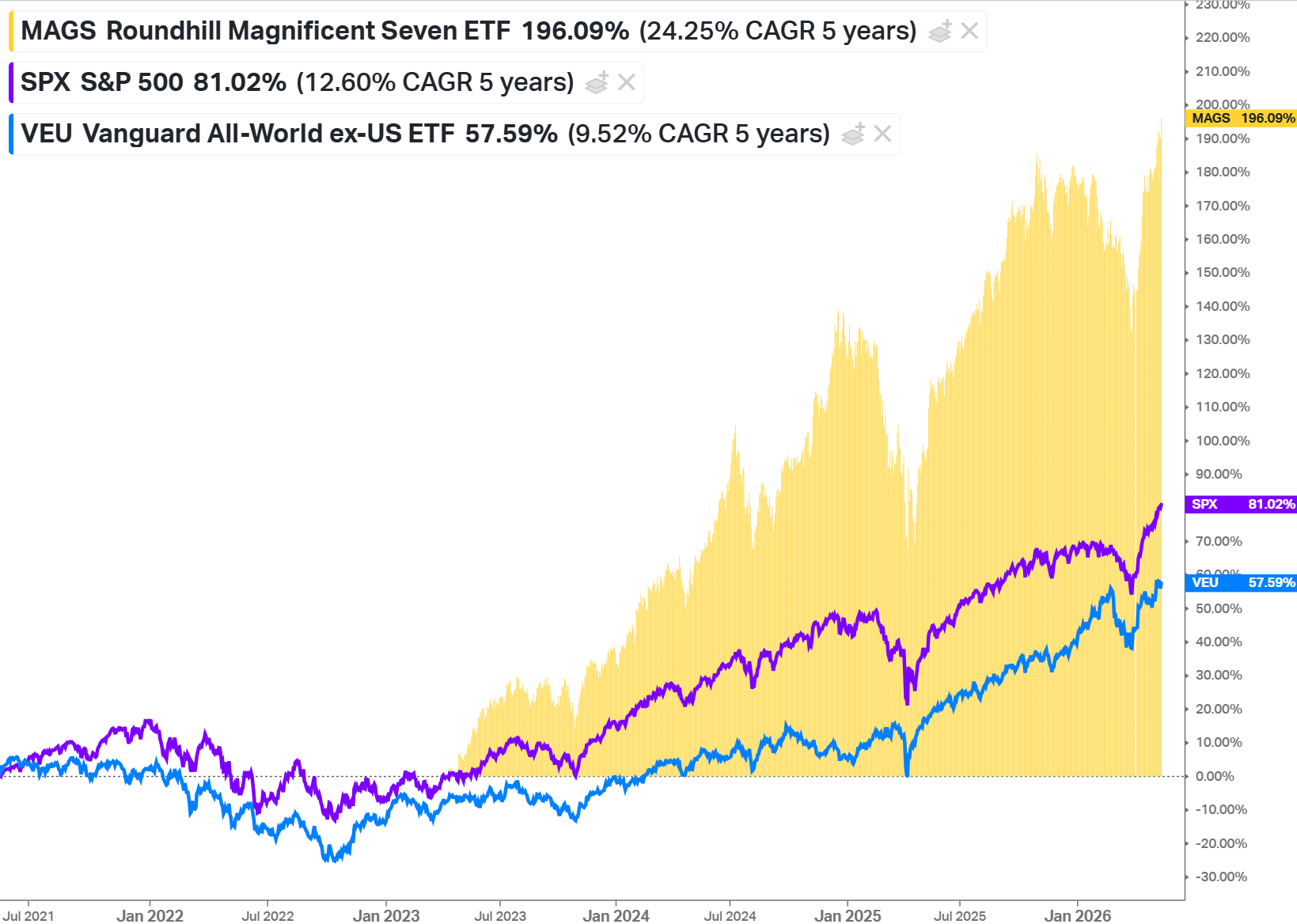
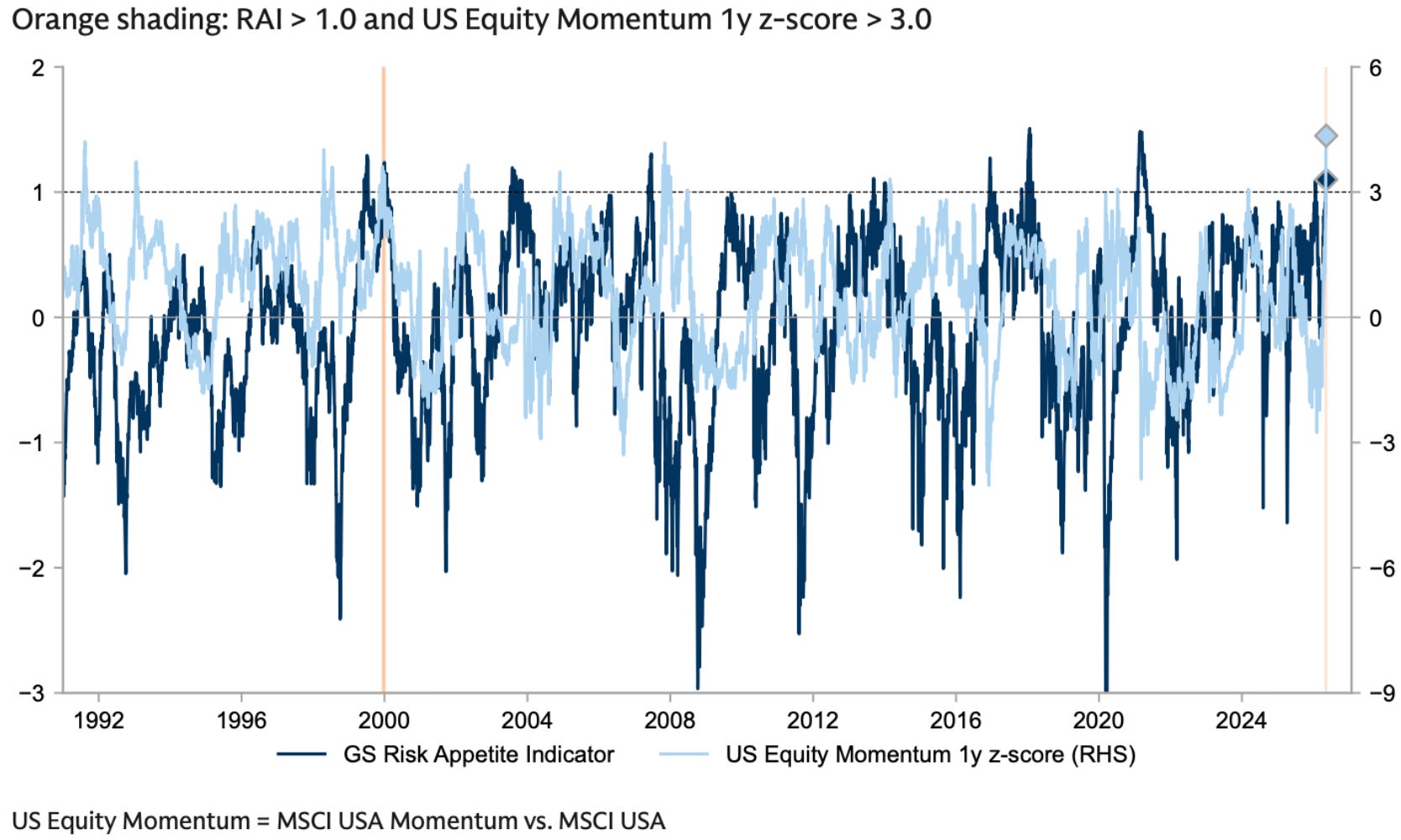
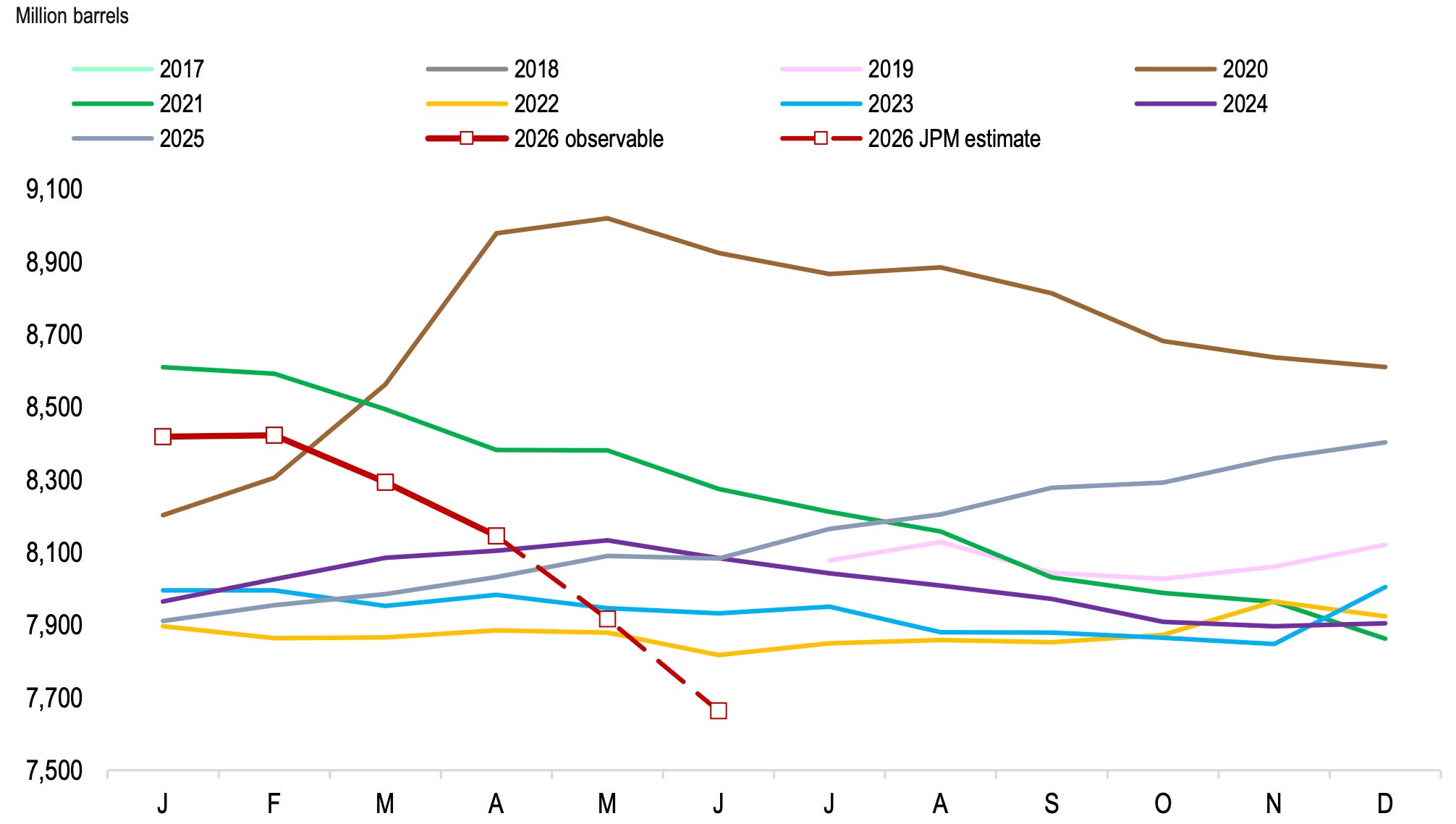
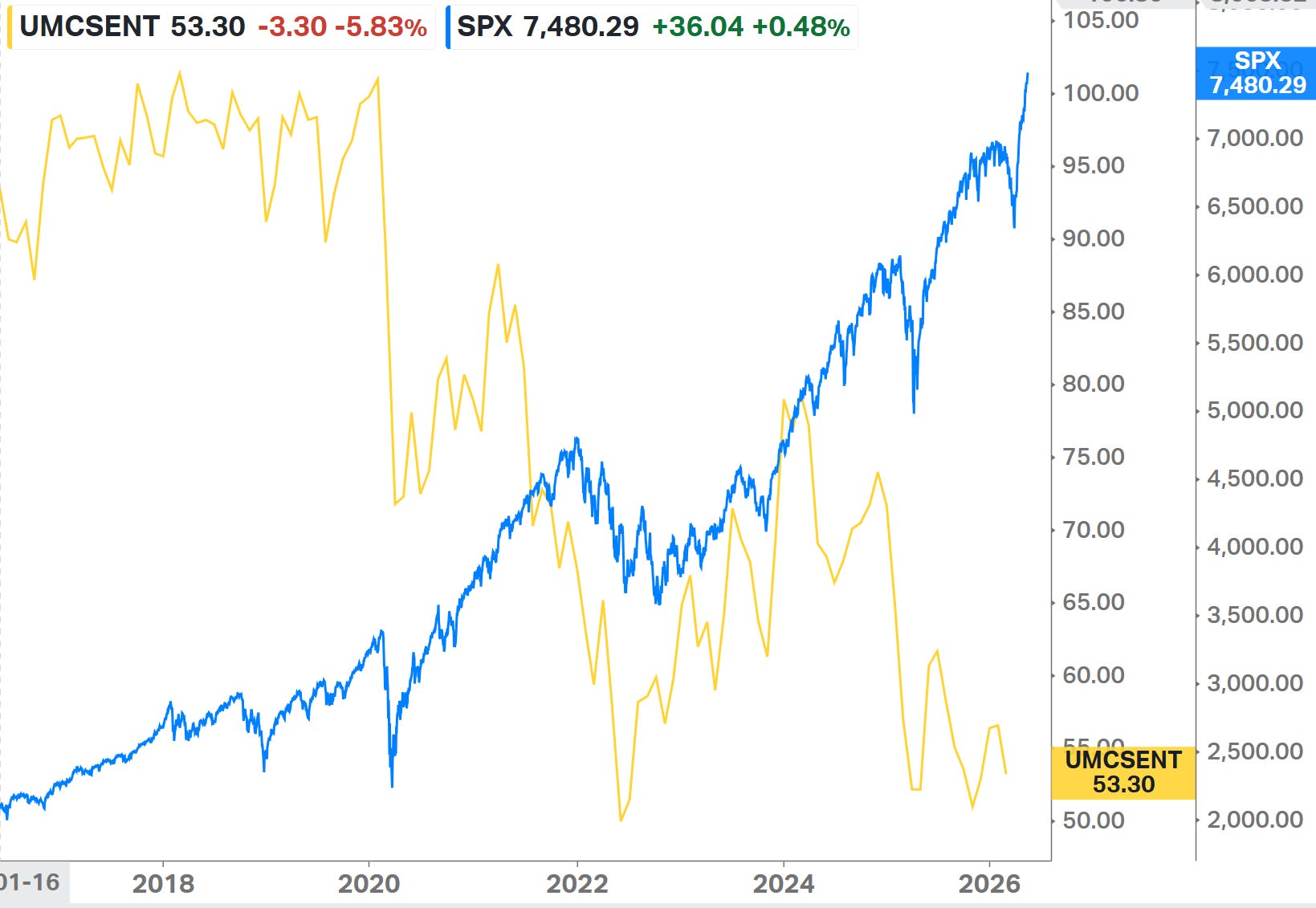
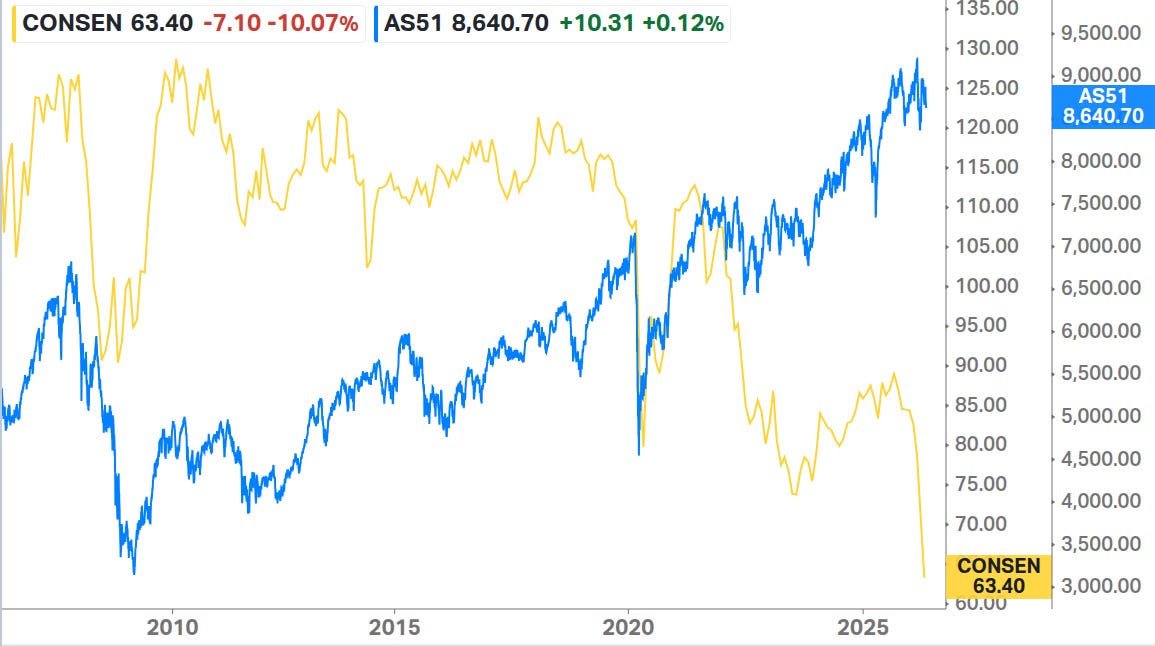
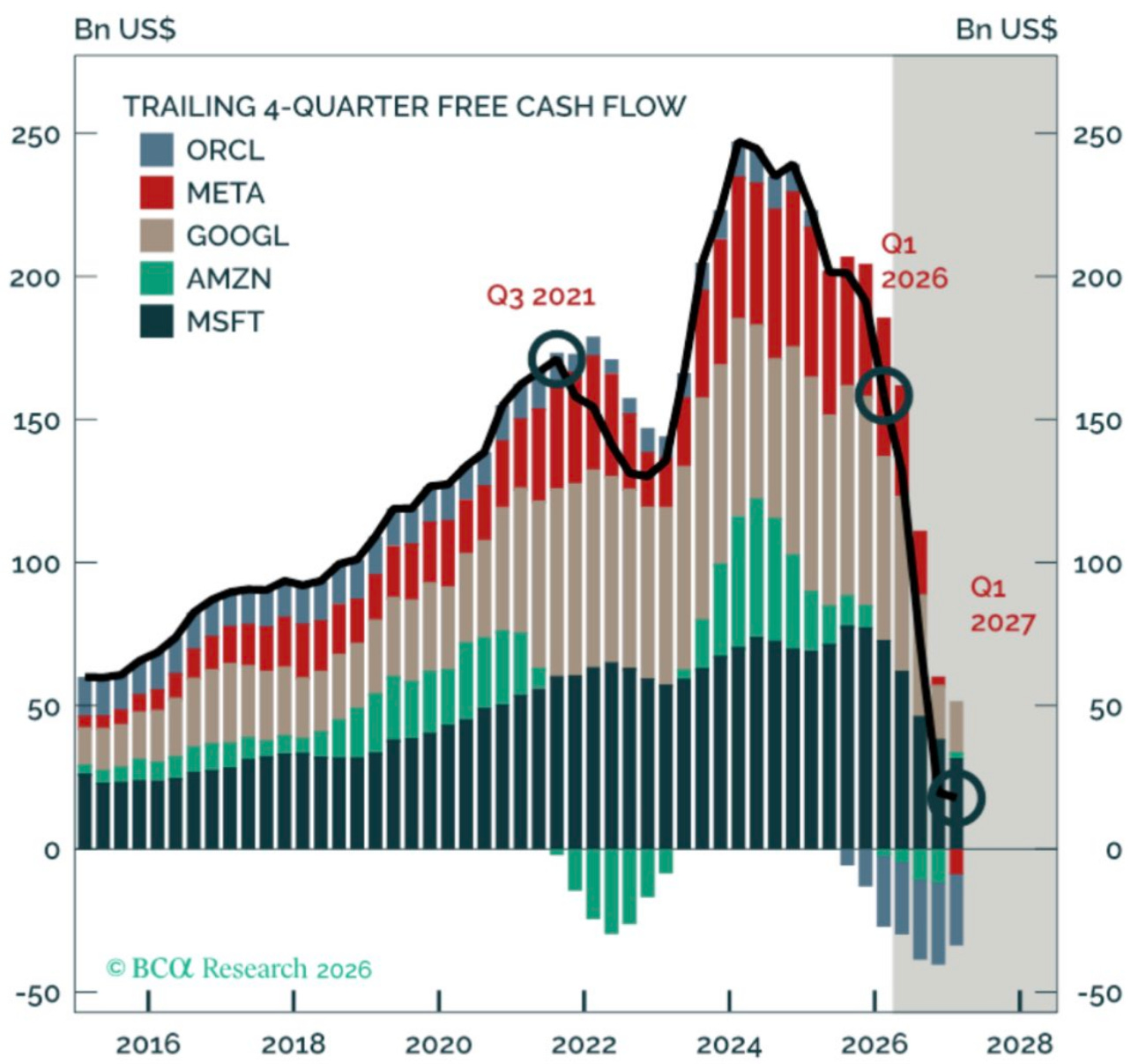
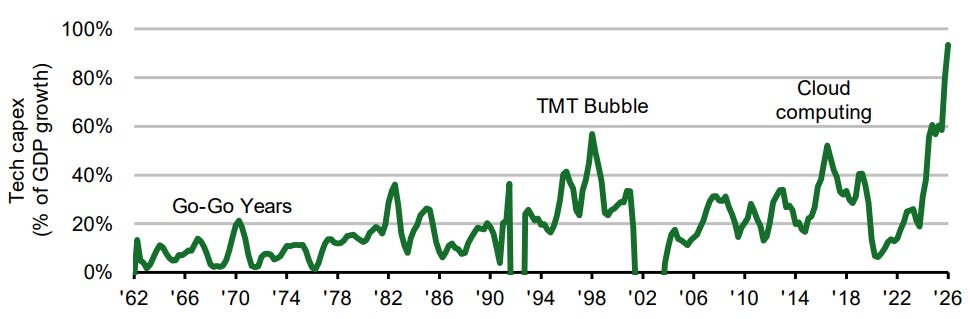
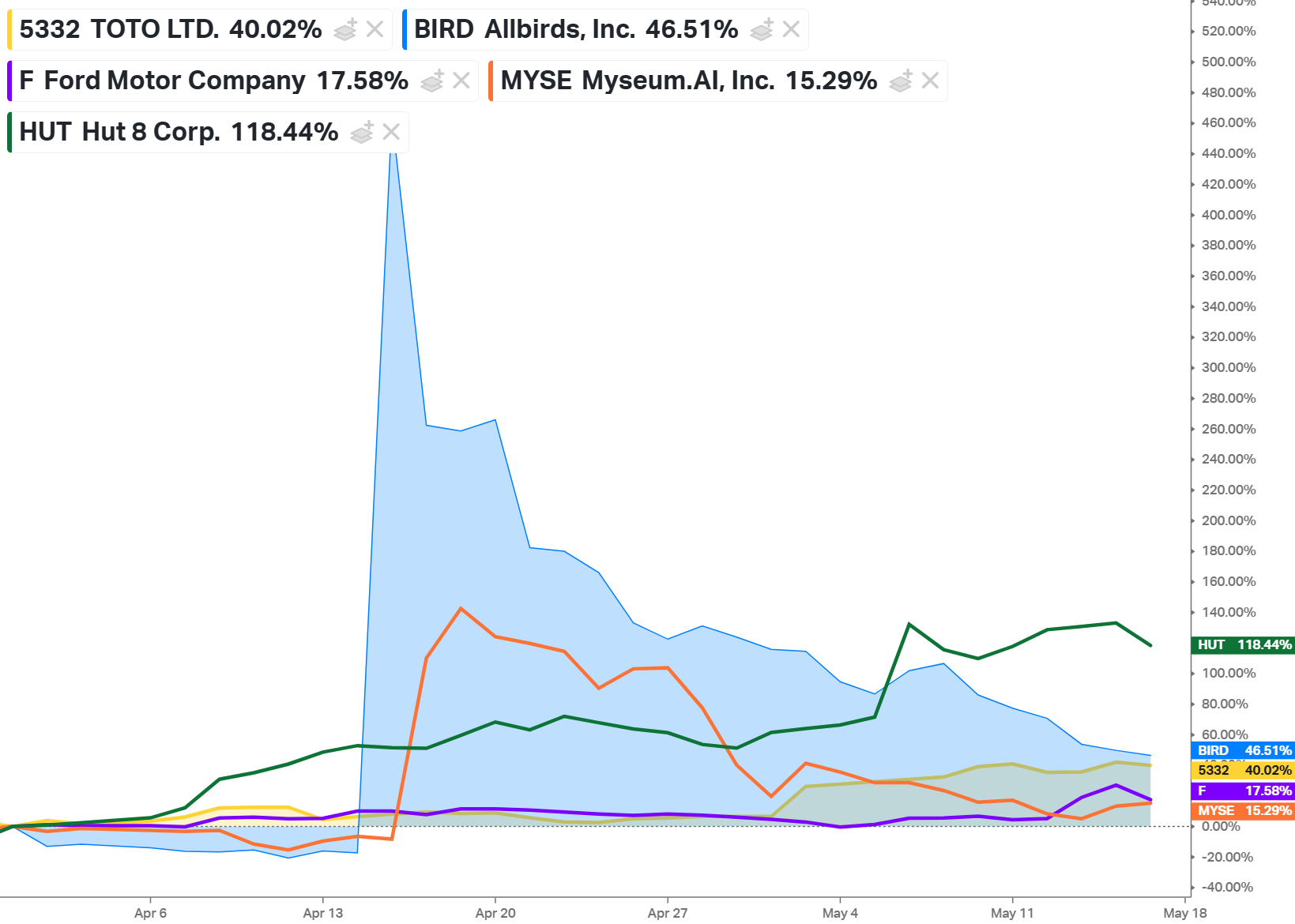
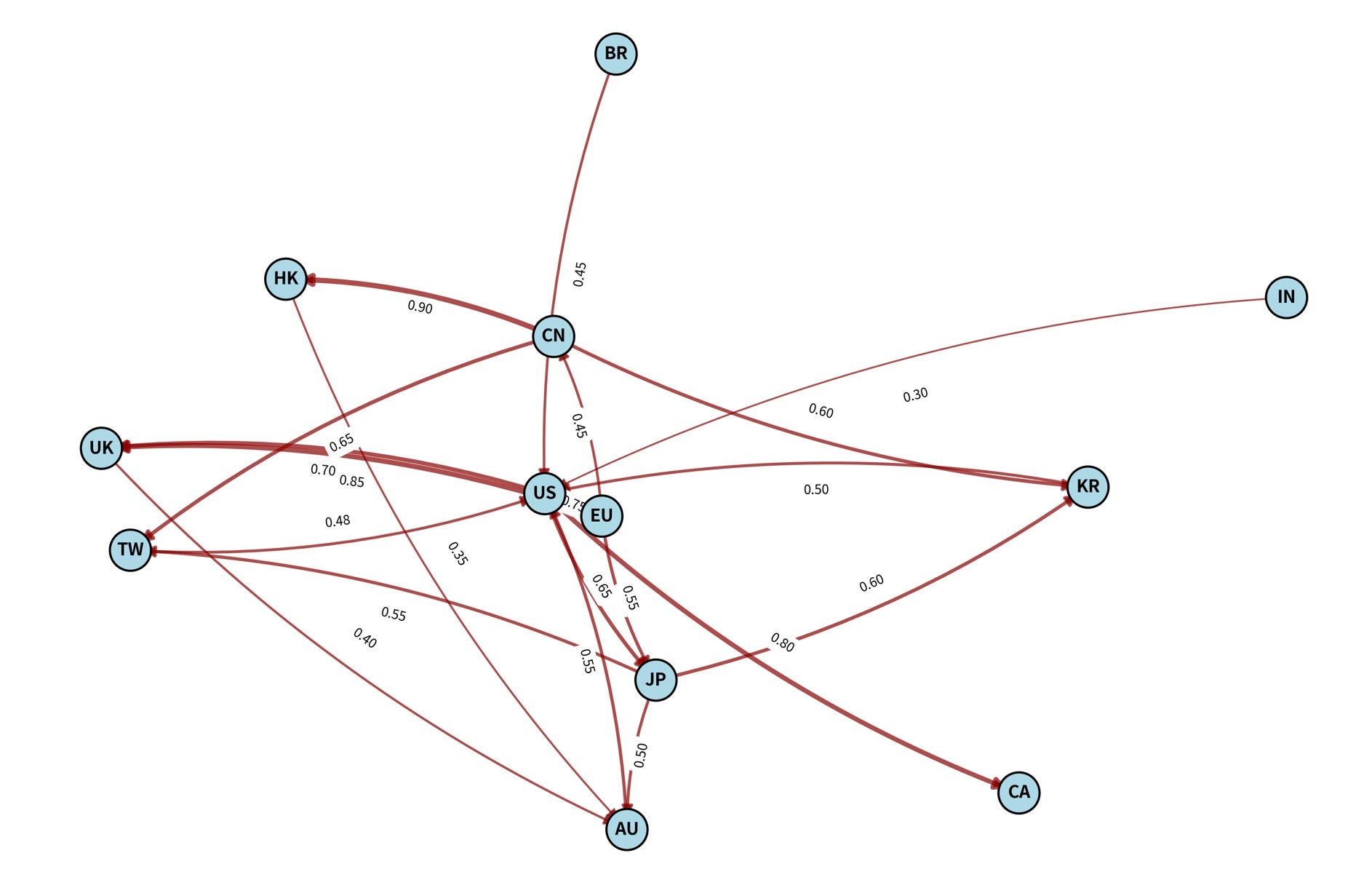
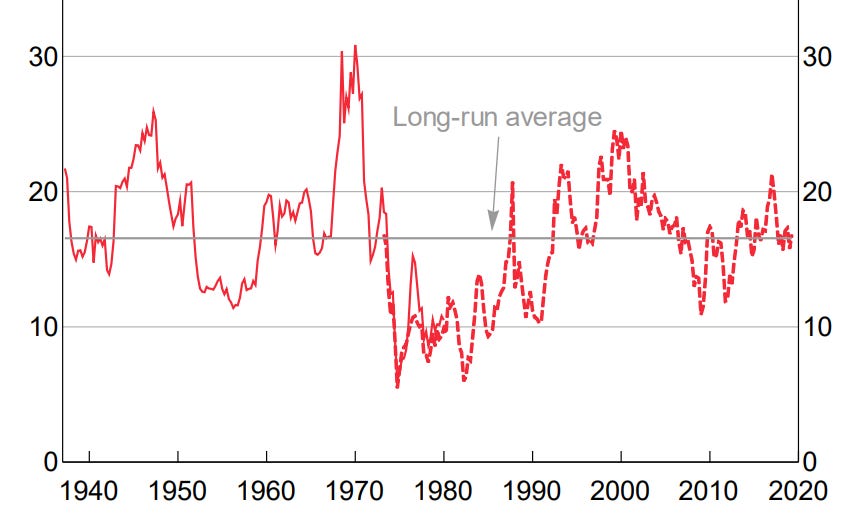
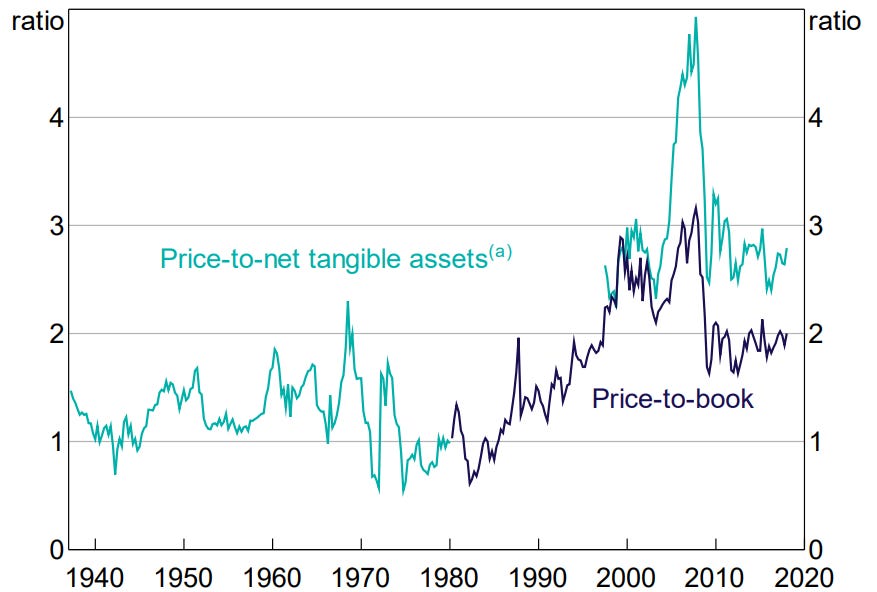
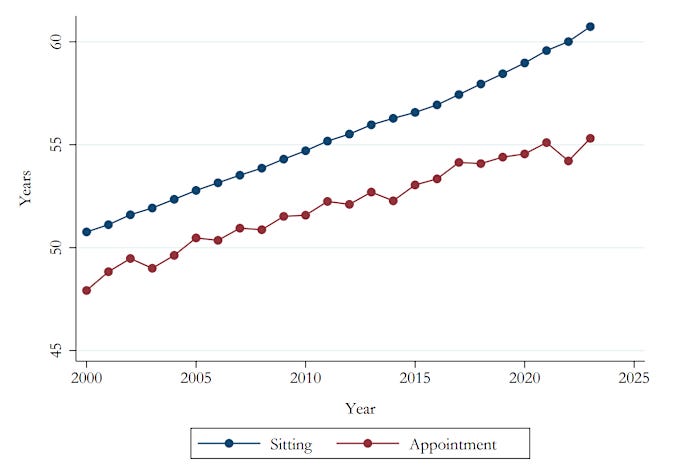
10k Words Equitable Investors May 2026 (2-minute read) The "Magnficient 7" continue to lead the charge with investors exhibiting a strong appetite for risk. But global oil inventories are tracking low and so is consumer sentiment in Australia and the US. And so is the free cash flow of those large tech companies as tech capex approaches 100% of US GDP. The game of pivoting to the hot space has fired up with a shoe maker and a range of others associating themselves with "AI" and receiving a share price bump. We map the interconnectedness of global equity markets - and look at the long-term shift away from asset bases in Australian valuations. Finally, CEOs are getting older! Magnificent 7 v the world Source: Koyfin US risk appetite and equity momentum - hitting levels last seen in 2020 Source: Goldman Sachs Investment Research Global oil inventories Source: JP Morgan Commodities Research US consumer sentiment v. equities Source: Koyfin Australian consumer sentiment v equities Source: Iress, Koyfin "Mega Tech" free cash flow diminished - "capital light" model gone Source: BCA Research Tech capex approaching 100% of US GDP Source: Panmure Liberum AI pivot or pump? Source: Equitable Investors, Koyfin Global equity interconnectedness network (simulted via piecewise Network VAR Spillover Coefficients) Source: Grok, Equitable Investors Australian equity market's long-term trailing valuation multiples Source: RBA Average age of CEOs over time (US data)
Source: FT Alphaville, "Aging at the Very Top" Funds operated by this manager: Equitable Investors Dragonfly Fund Disclaimer Past performance is not a reliable indicator of future performance. Fund returns are quoted net of all fees, expenses and accrued performance fees. Delivery of this report to a recipient should not be relied on as a representation that there has been no change since the preparation date in the affairs or financial condition of the Fund or the Trustee; or that the information contained in this report remains accurate or complete at any time after the preparation date. Equitable Investors Pty Ltd (EI) does not guarantee or make any representation or warranty as to the accuracy or completeness of the information in this report. To the extent permitted by law, EI disclaims all liability that may otherwise arise due to any information in this report being inaccurate or information being omitted. This report does not take into account the particular investment objectives, financial situation and needs of potential investors. Before making a decision to invest in the Fund the recipient should obtain professional advice. This report does not purport to contain all the information that the recipient may require to evaluate a possible investment in the Fund. The recipient should conduct their own independent analysis of the Fund and refer to the current Information Memorandum, which is available from EI. |

22 May 2026 - Performance Report: Altor AltFi Income Fund
[Current Manager Report if available]

22 May 2026 - Hedge Clippings |22 May 2026
|
|
|
|
Hedge Clippings | 22 May 2026 The 2026 Budget may come to be remembered less for its promised "fairness" than for the investment shock it has unleashed. Labor's changes to negative gearing and capital gains tax are being sold as a rebalance in favour of younger Australians. The political risk for Albanese and Chalmers is that they want to make it look like a targeted hit on the very wealthy, and older, asset rich, boomers. In reality, it is a broader attack on investment, property ownership and household balance sheets across a much wider demographic. For the property market, the early signs are not encouraging. Macquarie has reportedly stopped factoring negative gearing into some serviceability calculations, and Westpac has told brokers that some investor's loan pre-approvals will need reassessment. Once banks begin changing lending assumptions, policy theory quickly becomes market reality. The danger is not simply that investor demand weakens. It is that prices fall into an already fragile housing market. Morgan Stanley has reportedly warned of a 5-10% national house-price correction, with some analysts pointing to sharper risks in Sydney and Melbourne. That may sound like good news for first-home buyers. But falling prices are not costless. Recent buyers with high loan-to-value ratios are most exposed. The RBA has previously warned that negative equity makes borrowers and lenders more vulnerable, because a stressed borrower may be unable to repay the loan even by selling the property. The housing market is not the share market, and home loans do not operate like margin loans. But the feedback loop can still be brutal: weaker sentiment, tighter credit, fewer buyers, forced sales, lower prices, and then even tighter credit. What makes the current environment particularly dangerous is that the pressure points are no longer confined to one part of the economy. The Budget has not only shaken confidence in residential property investment. It has also fundamentally altered the tax landscape for equities, private investment and small business. At the very moment the government should arguably be encouraging investment and risk-taking, it has instead introduced a level of policy uncertainty that is causing both investors and lenders to reassess their appetite for risk. Meanwhile, inflation is proving far more stubborn than Canberra anticipated. To be fair to the government, a large part of the latest inflation shock is external. The RBA now expects headline inflation to peak at 4.8% in mid-2026, with underlying inflation remaining above the top of its target band until at least mid-2027. Consumer sentiment has already deteriorated sharply. The latest Westpac-Melbourne Institute survey reportedly fell 12.5% in April to levels not seen since the pandemic, while NAB business confidence suffered one of its steepest monthly falls in decades. And now the labour market is beginning to crack. Australia's unemployment rate rose to 4.5% in April - the highest level since November 2021 - after employment unexpectedly fell by almost 19,000 jobs. Economists are increasingly describing the labour market as "softening", with hiring intentions weakening under the combined weight of higher borrowing costs, weaker consumer demand and growing uncertainty. The result is a deeply uncomfortable combination: slowing growth, weakening confidence, and persistent inflation. Which brings us to the question nobody in Canberra wants to answer or us to ask: How close are we to recession? The margin for error is narrowing rapidly. The RBA itself has acknowledged that each successive rate rise increases recession risk. Under its more adverse scenarios, unemployment could rise above 5% and economic growth could slow to levels consistent with recession. At a time when confidence was already fragile, Chalmers chose to target the very areas most sensitive to confidence and leverage - housing, investment and small business - which drive the economy. The government may have hoped voters would see "fairness" - odd from a government that broke explicit pre-election promises. And this is where the Budget may prove both economically damaging for all, and for the government, politically catastrophic. For the past year Albanese has appeared untouchable. Today, the parallels with Bill Shorten's franking credits debacle prior to the 2019 election are becoming harder to ignore. News | Insights Market Commentary | Glenmore Asset Management China's Luxury Reset: What we're seeing on the ground and why it matters | Insync Fund Managers April 2026 Performance News Bennelong Concentrated Australian Equities Fund |
|
|
If you'd like to receive Hedge Clippings direct to your inbox each Friday |

21 May 2026 - Performance Report: Bennelong Concentrated Australian Equities Fund
[Current Manager Report if available]

21 May 2026 - Global Perspectives: Addressing the most essential questions around AI
|
Global Perspectives: Addressing the most essential questions around AI Janus Henderson Investors May 2026 (Duration: 29 minutes) In this episode, Portfolio Manager Denny Fish takes a deep dive into the current state of artificial intelligence (AI), including the latest advancements, its potential to propel economic growth, and the rise of agentic AI and its impact on software business models. He also shares insights from a recent research trip in China. |
|
Funds operated by this manager: Janus Henderson Australian Fixed Interest Fund , Janus Henderson Conservative Fixed Interest Fund , Janus Henderson Diversified Credit Fund , Janus Henderson Global Natural Resources Fund , Janus Henderson Tactical Income Fund , Janus Henderson Australian Fixed Interest Fund - Institutional , Janus Henderson Conservative Fixed Interest Fund - Institutional , Janus Henderson Cash Fund - Institutional , Janus Henderson Global Multi-Strategy Fund , Janus Henderson Global Sustainable Equity Fund , Janus Henderson Sustainable Credit Fund All opinions and estimates in this information are subject to change without notice and are the views of the author at the time of publication. Janus Henderson is not under any obligation to update this information to the extent that it is or becomes out of date or incorrect. The information herein shall not in any way constitute advice or an invitation to invest. It is solely for information purposes and subject to change without notice. This information does not purport to be a comprehensive statement or description of any markets or securities referred to within. Any references to individual securities do not constitute a securities recommendation. Past performance is not indicative of future performance. The value of an investment and the income from it can fall as well as rise and you may not get back the amount originally invested. Whilst Janus Henderson believe that the information is correct at the date of publication, no warranty or representation is given to this effect and no responsibility can be accepted by Janus Henderson to any end users for any action taken on the basis of this information. |

20 May 2026 - Performance Report: DAFM Digital Income Fund (Digital Income Class)
[Current Manager Report if available]

20 May 2026 - Who's winning the AI race - and does it matter?
|
Who's winning the AI race - and does it matter? abrdn May 2026 (Duration: 27 Mins) In this episode, we explore how artificial intelligence (AI) is reshaping global competition. We compare the US and China's approaches to AI, looking beyond the headlines to examine models, infrastructure, power, government strategy and the real world application of AI across economies. Nick speaks to Bob, and they discuss whether AI really represents a race between the US and China, how different policy and market structures are shaping outcomes, and why the implications for growth and productivity may matter more than who is technically "ahead" at any given moment. |
|
Funds operated by this manager: abrdn Sustainable Asian Opportunities Fund , abrdn Emerging Markets Equity Fund , abrdn Sustainable International Equities Fund , abrdn Global Corporate Bond Fund (Class A) |

19 May 2026 - Performance Report: Cyan C3G Fund
[Current Manager Report if available]

reaching new highs during April. (2-minute read)
19 May 2026 - Glenmore Asset Management - Market Commentary
|
Market Commentary - April Glenmore Asset Management May 2026 (2-minute read) The US market appeared to shrug off the ongoing war in Iran, reaching new highs during April. This was primarily driven by the tech sector, resulting in the NASDAQ rising +15.3%, representing its strongest monthly gain since April 2020. Whilst not being as tech-heavy, the S&P 500 was boosted by similar factors, rising +10.4%. US markets easily outpaced their international peers, with the Euro Stoxx 50 and FTSE 100 rising +5.6% and +2.0% during the month, respectively. Similarly, domestic markets lagged the US, with the ASX All Ordinaries Accumulation Index rising +2.4%. The gains were led by the Tech (+12.3%) and Real Estate (+8.0%) sectors, whilst Healthcare was the key detractor (-8.4%), dragged down by Cochlear (COH), which fell -44% following an earnings downgrade. In bond markets, the US 10-year bond yield rose +5 basis points (bp) to 4.37%, whilst its Australian counterpart rose +9bp to 5.1%. The Australian dollar rebounded during the month, rising +4.3% to US$0.72, implying an increase of 3.0 cents. Funds operated by this manager: |

18 May 2026 - Performance Report: ECCM Systematic Trend Fund
[Current Manager Report if available]